Manual Bread Slicer: Hand-Crank Models, Slicing Guides and How to Choose (2026)
For bread alone, our pick is the Zassenhaus Classic: a hand-crank slicer with a serrated Solingen blade and a stepless range of 1 to 18 mm (about 1/25 to 0.7 inch). If you also slice cheese and cured sausage, the Graef H9 with its carriage fits better; if you slice one loaf a week, a slicing guide for your own knife may be all you need.
Hand-crank slicers and slicing guides side by side
Manufacturer specs, never invented tests
Honest where manual is not cheaper or smaller
The short version
A manual bread slicer cuts a loaf into even slices without a motor – either a round serrated blade you turn with a crank while the loaf slides against an adjustable fence, or a frame that guides your bread knife. Brand crank slicers such as the Zassenhaus Classic sit in the premium price class; slicing guides cost far less but need a good knife and a loaf that fits the frame.
Disclosure: This page contains affiliate links (marked with *). If you buy through them, we earn a small commission at no extra cost to you. As an Amazon Associate I earn from qualifying purchases. Learn more
The pick, in one paragraph
Most people who look for a bread slicer want one thing: slices of the same thickness from their own loaf, without a cord on the counter. That is what the Zassenhaus Classic is built for. It has a round serrated blade made in Solingen, a die-cast and stainless steel body on a beechwood base and four suction feet. According to the retailer Culinaris it cuts steplessly from 1 to 18 mm, measures about 11.8 × 10 inches and weighs 5.3 lb. Among the brand hand-crank slicers in our comparison of manual bread slicers, it needs the least counter space.
Our pick: hand-crank slicerZassenhaus
Zassenhaus Classic
The classic rotary bread slicer: serrated Solingen blade, crank, beechwood base – no motor, no cord.
Why here: The brand crank slicer with documented specs and the smallest footprint, for kitchens that mostly slice bread.
Best for: Households that mostly slice bread and want a brand crank slicer with documented specs and a compact footprint.
Strengths
Stepless 1–18 mm (about 1/25–0.7 in) – from thin sandwich slices to thick toast
Die-cast and stainless steel body on a beechwood base, four suction feet
Smallest footprint of the brand hand-crank slicers in our comparison
Weaknesses
No carriage and no end-piece holder listed – the last piece of the loaf needs care
Premium price class, several times the unbranded crank slicers
Only the blade is documented as made in Solingen; retailers list the Czech Republic as country of origin
Type
Hand-crank slicer for bread
Blade
Round serrated stainless blade, made in Solingen (diameter not stated)
Slice thickness
1–18 mm stepless (about 1/25–0.7 in)
Size
11.8 × 10 × 7.5 in (30 × 25.5 × 19 cm)
Weight
5.3 lb (2.4 kg)
Carriage & holder
Beechwood base, no carriage or end-piece holder listed
The weak point belongs right next to the praise: no carriage and no end-piece holder are listed for the Classic, so the last piece of the loaf needs care. It also sits in the premium price class. Whether that is worth it against the unbranded crank slicers is the subject of is the Zassenhaus worth it; the model itself has its own page, Zassenhaus Classic.
Two kinds of bread slicer
The hand-crank slicer (also called a rotary bread slicer) does the cutting for you. One hand turns the crank, the other pushes the loaf against the fence, and the serrated blade saws through crust and crumb. The thickness is set at the fence, often steplessly. How the mechanism works, what to check on the blade and how to handle the last slice is explained on the page about the hand-crank bread slicer.
The bread slicing guide is not a machine. It is a frame of plastic, bamboo or steel with slots or rails, and you saw with your own bread knife. Guides are light, fold flat and cost little, but the result depends on your knife and on a steady hand. All types are compared on the page about the bread slicing guide, and the core decision between the two is laid out in guide or hand-crank slicer.
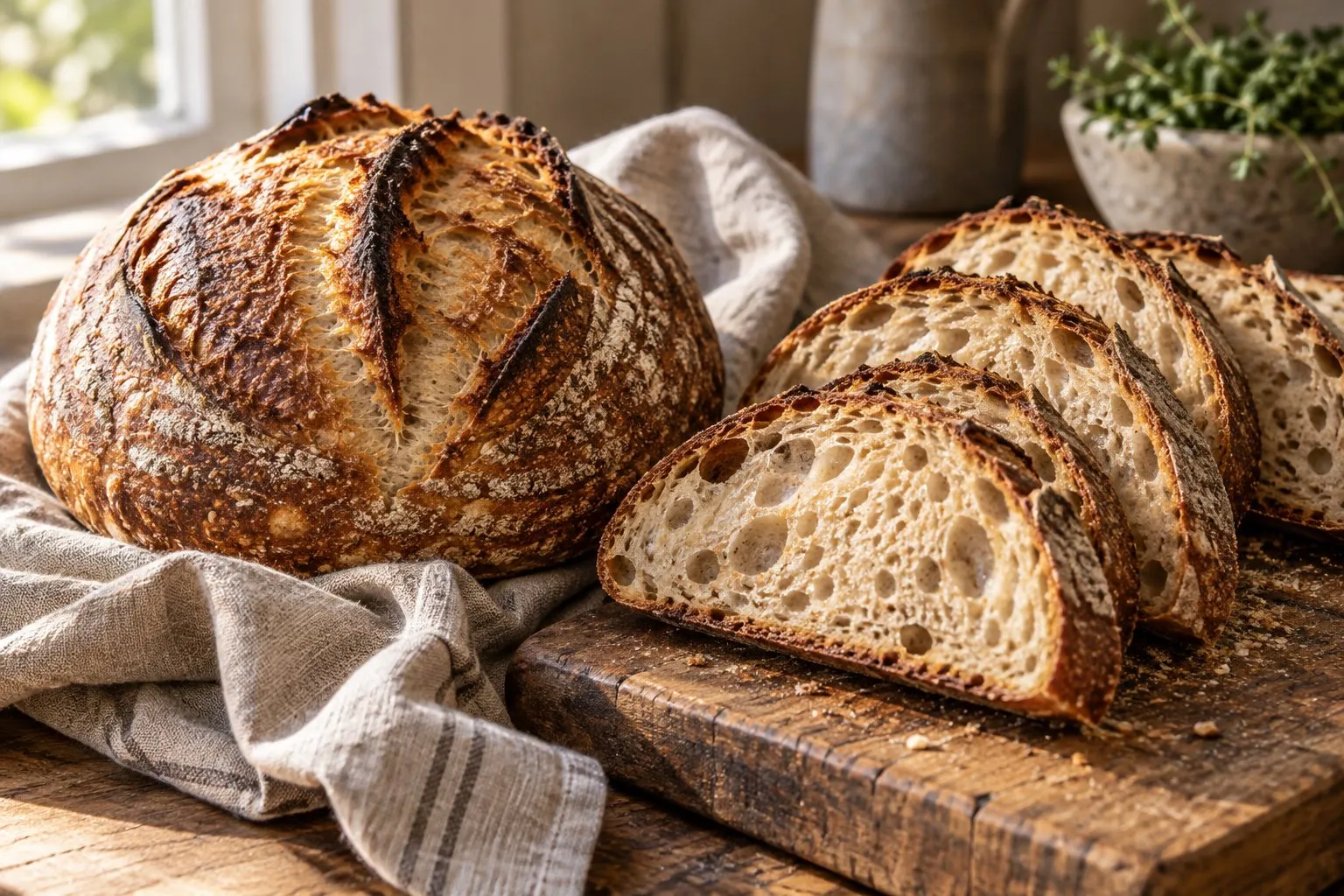
Illustrative image: even slices are the reason to use a slicer at all · Photo: AI-generated (OpenAI)
A third family shares the name but works differently: commercial bakery slicers and electric food slicers. They have motors, and they come up below.
Find your slicer in four questions
Slicer finder
Question 1 of 4
What do you want to slice?
Cheese and cured sausage need a carriage – a bread-only crank slicer has none.
Match the slicer to your loaf
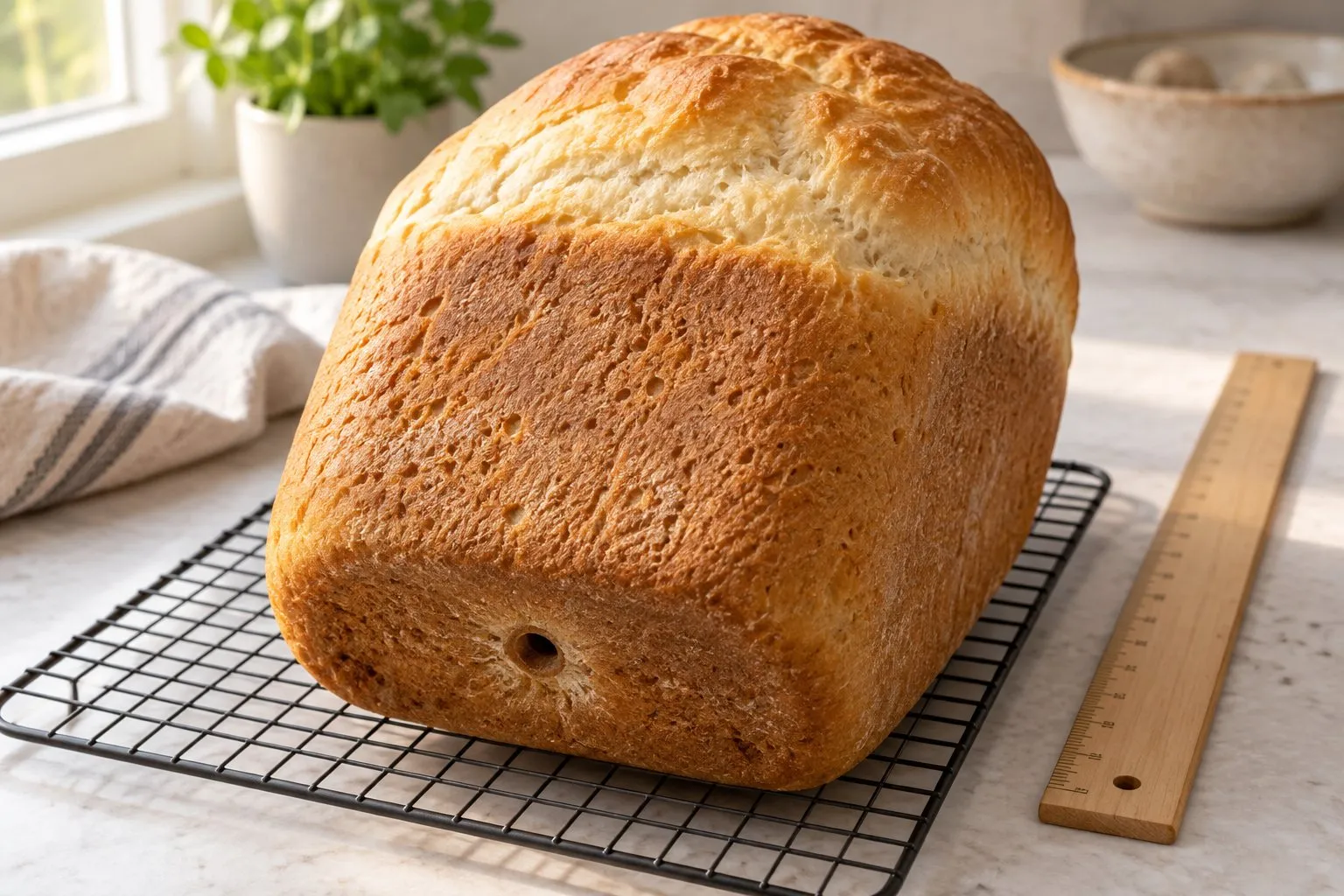
The loaf decides more than the brand. A tall bread-machine loaf, a wide sourdough boule and a soft sandwich loaf each push a slicer to a different limit.
Illustrative image: a tall bread-machine loaf is the hardest test for a slicing guide · Photo: AI-generated (OpenAI)
Most budget crank slicers do not state a maximum loaf size in their listings. The Akebono PS-955 guide, by contrast, documents it: loaves up to about 7.9 inches tall and 5.5 inches wide. Measure your loaf before you order.
Which slicer fits you?
Which slicer fits you?
If you mostly slice bread and want a brand crank slicer with documented specs → Zassenhaus Classic
Specs from manufacturer sheets or retailer data; “(listing)” marks Amazon listing data. Swipe sideways on a phone.
The Graef H9 and the ritter manus 3 are hand-crank food slicers with a stainless carriage, built for cold cuts as much as for bread. Both are documented by their makers: the Graef H9 slices from 0 to 15 mm with a 7.5-inch blade and includes an end-piece holder, the ritter manus 3 reaches about 20 mm but sells the holder separately. The Brvclon on the right stands for the large group of budget crank slicers: widely listed, but with listing data only – no blade size, no loaf limit. It is an option, not a pick. All models with reasons are in the comparison.
Brvclon
Brvclon slicer, aluminum frame
Brvclon hand-crank slicer with a stainless blade, aluminum alloy frame and wood base; 10 bread bags in the box (per listing).
Seller data only
Best for: Budget buyers who want a crank slicer and bread bags in one order.
Loaf size: Measure the height and width of your usual loaf and compare it with the slicer or guide. Missing data in a listing is a warning sign.
Slice range: Decide how thick your thickest slice should be, then compare: the Zassenhaus Classic reaches 18 mm (about 0.7 in), the Graef H9 15 mm (0.6 in), food slicers like the Cuisinart FS-75 half an inch.
Blade: A round serrated blade is the norm for crusty bread. Check whether a replacement blade is sold.
The last slice: A carriage with thumb guard or an end-piece holder keeps fingers away from the blade. Many bread-only crank slicers have neither.
Space and weight: Brand crank slicers weigh about 5 to 7 lb and rarely fold. Guides fit a drawer.
Cleaning: Check the manual for dishwasher rules before the first loaf – the Akebono guide, for example, is hand-wash only.
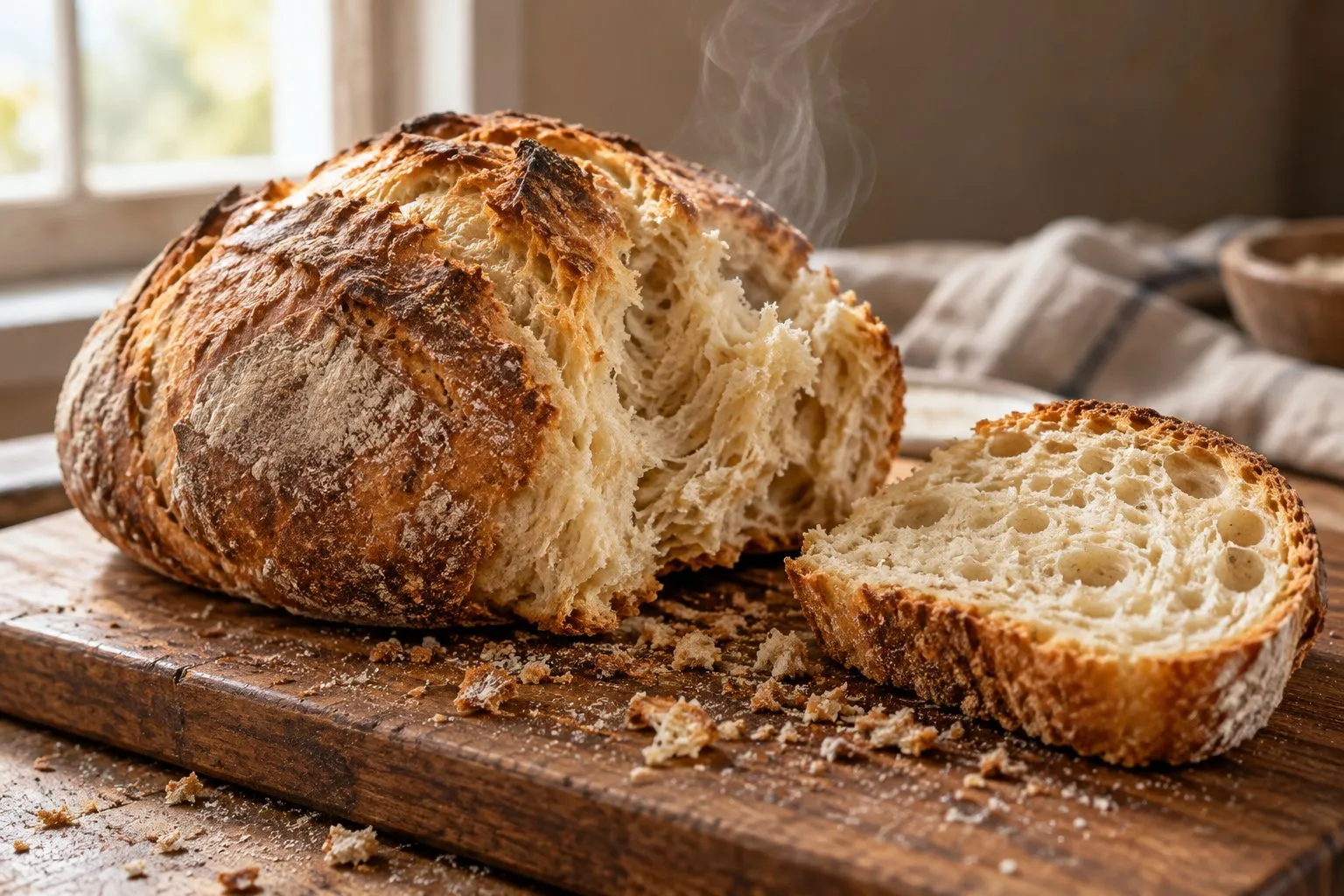
Illustrative image: a torn, ragged end next to one clean slice · Photo: AI-generated (OpenAI)
Electric bread slicers: what exists for home use
If you want a motor, look at electric food slicers, not at bakery machines. The Cuisinart Kitchen Pro FS-75 has a 7.5-inch serrated blade and is listed for bread, roasts and firm cheese, with slices from 1/32 to 1/2 inch. That upper limit is the catch: thick toast slices are beyond it. Commercial bread slicers cut a whole loaf at once but at one fixed thickness and in a price class meant for bakeries. The page on electric bread slicers compares both.
Yes, mechanically they are simple: a crank turns a round serrated blade while your other hand pushes the loaf against a fence that sets the thickness. The Zassenhaus Classic, for example, adjusts steplessly from 1 to 18 mm. How much effort a hard crust takes has not been measured independently; we found no lab test of manual slicers.
+What is the best bread slicer machine for home use?
For bread only, our pick is the Zassenhaus Classic because its specs are documented and it has the smallest footprint of the brand crank slicers. For bread plus firm cheese or salami, the Graef H9 with carriage and end-piece holder fits better. Commercial electric bread slicers are counter machines for bakeries, not home appliances.
+How much does a manual bread slicer cost?
It depends on the type. Plastic and bamboo slicing guides sit in the budget price class, unbranded hand-crank slicers in the budget to mid-range class, and brand crank slicers such as the Zassenhaus Classic, Graef H9 and ritter manus 3 in the premium class. We name no exact prices because they change; the buttons show the current price.
+Are hand-crank bread slicers safe?
A hand-crank slicer has no motor and no cord, so electrical safety rules do not apply. The risks are a base that slides, the last piece of the loaf when your fingers get close to the blade, and cleaning the exposed edge. Suction feet, a carriage with thumb guard or an end-piece holder reduce them; follow the manual for cleaning.
+Is a bread slicer better than a bread knife?
For even slices, yes – a fence or a guide sets the same thickness every time. A good serrated bread knife is still needed for a slicing guide, and it is the cheaper option if you slice only one loaf a week. Hand-crank slicers pay off when you slice several loaves a week or want very thin slices.
Who compares here
manualbreadslicer.com Editorial Team
Bread slicer comparisons & explainers
We are the editorial team at manualbreadslicer.com. We compare hand-crank bread slicers, slicing guides and their electric alternatives using manufacturer spec sheets, manuals, retailer data and primary sources such as Lemelson-MIT – with sources on every page. We do not run lab tests, and we say so openly.
Privacy settings: This website sets no cookies. May we count page views with Cloudflare Web Analytics? It works without cookies and without advertising profiles. We store your choice in your browser. Privacy policy