Buying guide
Bread Slicer for Homemade Bread: Crank Slicer, Guide or Knife for Your Loaf Size
Yes, there are bread slicers made for homemade loaves, and the right one depends on the shape of your loaf. For crusty free-form loaves and frequent baking, our pick is the Zassenhaus Classic hand-crank slicer; for sandwich loaves from a standard pan, the Akebono PS-955 slicing guide with your own bread knife is the documented low-cost option.
Disclosure: This page contains affiliate links (marked with *). If you buy through them, we earn a small commission at no extra cost to you. As an Amazon Associate I earn from qualifying purchases. Learn more
The short version
For homemade bread, pick by loaf. Sandwich loaves from an 8 1/2 × 4 1/2-inch pan fit a slicing guide such as the Akebono PS-955, which takes loaves up to about 7.9 inches tall and 5.5 inches wide. Crusty or round loaves suit a hand-crank slicer such as the Zassenhaus Classic (1 to 18 mm). Let the loaf cool completely before slicing, whichever tool you use.
What's on this page
- Start with your loaf, not with the slicer
- Our pick for homemade loaves of every shape
- Our pick for sandwich loaves
- Which slicer fits your baking?
- Spec sheets side by side
- Budget options: guides with and without a knife
- Four things that matter more with homemade bread
- How thick should homemade slices be?
- Typical mistakes
- Find your slicer
- Our recommendation
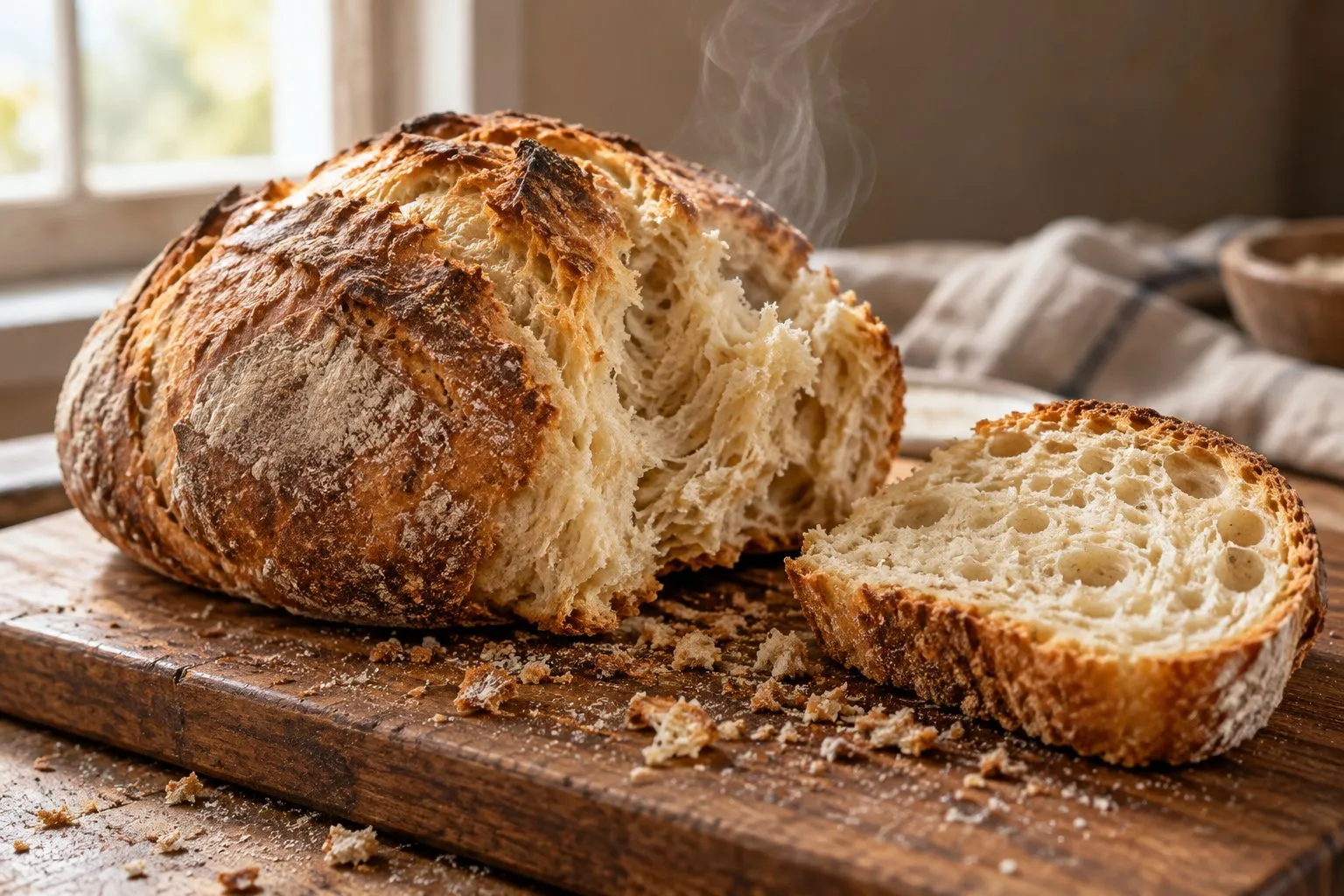
Start with your loaf, not with the slicer
Homemade bread is not one shape. A sandwich loaf baked in a pan has straight sides and a domed top. A free-form country loaf or sourdough boule is round or oval, wide and crusty. A loaf from a bread machine is tall and square. Each one pushes a slicer to a different limit, and most listings do not say where that limit is.
Two numbers decide the fit: the height of your loaf at its tallest point and its width at the widest point. King Arthur Baking's white sandwich bread, for example, is baked in an 8 1/2 × 4 1/2-inch loaf pan. That pan width is a first clue for a guide, but the loaf can bulge above the rim, so measure the baked loaf itself.
| Your homemade loaf | What usually fits | Watch out for | Read more |
|---|---|---|---|
| Sandwich loaf from a standard pan | Slicing guide or crank slicer | Guide height for the domed top | Bread slicing guides |
| Crusty country loaf or boule | Hand-crank slicer | Width – most guides are too narrow | Sourdough slicers |
| Tall bread-machine loaf | Crank slicer or a tall guide | Height of fence and guide walls | Bread-machine loaves |
| Soft enriched loaf (brioche, milk bread) | Crank slicer | Squashing – crank fast, push slowly | Hand-crank slicers |
Our pick for homemade loaves of every shape
Zassenhaus Classic
The classic rotary bread slicer: serrated Solingen blade, crank, beechwood base – no motor, no cord.
Why here: A crank slicer for bread only, with a stepless 1–18 mm range and no frame walls that limit the width of a crusty homemade loaf.
Best for: Households that mostly slice bread and want a brand crank slicer with documented specs and a compact footprint.
Strengths
- Stepless 1–18 mm (about 1/25–0.7 in) – from thin sandwich slices to thick toast
- Die-cast and stainless steel body on a beechwood base, four suction feet
- Smallest footprint of the brand hand-crank slicers in our comparison
Weaknesses
- No carriage and no end-piece holder listed – the last piece of the loaf needs care
- Premium price class, several times the unbranded crank slicers
- Only the blade is documented as made in Solingen; retailers list the Czech Republic as country of origin
- Type
- Hand-crank slicer for bread
- Blade
- Round serrated stainless blade, made in Solingen (diameter not stated)
- Slice thickness
- 1–18 mm stepless (about 1/25–0.7 in)
- Size
- 11.8 × 10 × 7.5 in (30 × 25.5 × 19 cm)
- Weight
- 5.3 lb (2.4 kg)
- Carriage & holder
- Beechwood base, no carriage or end-piece holder listed
Price class: Premium
View on Amazon(paid link to Amazon, opens in a new tab)Ad · paid link · check price & delivery on AmazonLearn more AdThe Zassenhaus Classic has no side walls around the loaf: the bread lies on a beechwood board and is pushed against the stop plate. That makes it more forgiving for round and oval loaves than a guide. Its limit is not stated, though: Culinaris lists the slice range (1 to 18 mm, about 1/25 to 0.7 inch), the size (about 11.8 × 10 × 7.5 inches) and the weight (5.3 lb), but no maximum loaf height. For soft bread, the manual advises cranking quickly while pushing the loaf slowly; for the end of the loaf, it suggests a cake fork as a holder.
Our pick for sandwich loaves
Akebono PS-955 guide
A compact Japanese slicing guide with five fixed thicknesses and a crumb tray – you bring your own bread knife.
Why here: The slicing guide with a documented loaf limit – up to about 7.9 inches tall and 5.5 inches wide – for pan loaves and your own bread knife.
Best for: Sandwich and pan loaves up to 7.9 in tall and 5.5 in wide, sliced with your own bread knife.
Strengths
- Five settings: 10, 15, 20, 25 and 30 mm (about 0.4 to 1.2 in)
- Light: about 13 oz (374 g), 9.3 × 6.3 × 2.7 in – fits a drawer
- Removable crumb tray, made in Tsubame, Japan
Weaknesses
- No knife included
- Loaf up to about 7.9 in high and 5.5 in wide – too narrow for most round boules
- Hand wash only; plastic parts heat-resistant to 70–120 °C (158–248 °F) per part
- Type
- Slicing guide for a bread knife
- Blade
- none – bread knife sold separately
- Slice thickness
- 10 / 15 / 20 / 25 / 30 mm (about 0.4–1.2 in)
- Loaf size
- up to 7.9 in high × 5.5 in wide (200 × 140 mm)
- Size
- 9.3 × 6.3 × 2.7 in (235 × 159 × 69 mm)
- Weight
- about 13 oz (374 g)
Price class: Budget
View on Amazon(paid link to Amazon, opens in a new tab)Ad · paid link · check price & delivery on AmazonLearn more AdThe Akebono PS-955 is a frame made in Tsubame, Japan. According to the retailer Globalkitchen Japan, it sets five thicknesses (10, 15, 20, 25 and 30 mm, about 0.4 to 1.2 in), takes loaves up to 200 mm high and 140 mm wide, weighs about 13 oz and has a removable crumb tray. It is hand-wash only, and the knife is sold separately. A wide boule will not fit. For a pan loaf, compare your measured loaf with the 5.5-inch width and 7.9-inch height limits.
Which slicer fits your baking?
Which slicer fits you?
If you bake crusty or round loaves several times a week → Zassenhaus Classic
View(paid link to Amazon, opens in a new tab)Ad · paid link · check price & delivery on AmazonIf you bake sandwich loaves in a standard pan and own a good bread knife → Akebono PS-955 guide
View(paid link to Amazon, opens in a new tab)Ad · paid link · check price & delivery on AmazonIf you also slice homemade cheese or cured sausage → Graef H9
View(paid link to Amazon, opens in a new tab)Ad · paid link · check price & delivery on AmazonIf you want a crank slicer in the budget price class
If your loaves come from a bread machine
Spec sheets side by side
| Comparison | Our pick: hand-crank slicerZassenhaus Classic | Our pick: slicing guideAkebono PS-955 guide | Our pick: bread, cheese & cured meatGraef H9 | Seller data onlyBrvclon hand-crank slicer | Seller data onlyKiss Core slicing guide |
|---|---|---|---|---|---|
| Type | Hand-crank slicer for bread | Slicing guide for a bread knife | Hand-crank food slicer with carriage | Hand-crank slicer for bread | Slicing guide for a bread knife |
| Blade | Round serrated stainless blade, made in Solingen (diameter not stated) | none – bread knife sold separately | 7.5 in (190 mm) serrated stainless steel | – | – |
| Slice thickness | 1–18 mm stepless (about 1/25–0.7 in) | 10 / 15 / 20 / 25 / 30 mm (about 0.4–1.2 in) | 0–15 mm stepless (up to 0.6 in) | adjustable with scale line (listing) | – |
| Loaf size | – | up to 7.9 in high × 5.5 in wide (200 × 140 mm) | – | – | adjustable width (listing) |
| Size | 11.8 × 10 × 7.5 in (30 × 25.5 × 19 cm) | 9.3 × 6.3 × 2.7 in (235 × 159 × 69 mm) | 14.8 × 14.4 × 9.6 in (375 × 365 × 245 mm) | – | – |
| Weight | 5.3 lb (2.4 kg) | about 13 oz (374 g) | 6.2 lb (2.8 kg) | – | – |
| Carriage & holder | Beechwood base, no carriage or end-piece holder listed | – | Stainless carriage with thumb guard, end-piece holder included | Metal guide, suction cups, wood base (listing) | Crumb tray, folds flat (listing) |
| Best for | Households that mostly slice bread and want a brand crank slicer with documented specs and a compact footprint. | Sandwich and pan loaves up to 7.9 in tall and 5.5 in wide, sliced with your own bread knife. | Kitchens that slice bread and also firm cheese or cured sausage without electricity. | Buyers who want the hand-crank principle in the budget to mid-range price class and can live with listing data only. | Occasional bakers who already own a good bread knife and want a foldable plastic guide. |
| Price class | Premium | Budget | Premium | Budget to mid-range | Budget |
| On Amazon(paid link to Amazon, opens in a new tab)Ad · paid link · check price & delivery on Amazon | On Amazon(paid link to Amazon, opens in a new tab)Ad · paid link · check price & delivery on Amazon | On Amazon(paid link to Amazon, opens in a new tab)Ad · paid link · check price & delivery on Amazon | On Amazon(paid link to Amazon, opens in a new tab)Ad · paid link · check price & delivery on Amazon | On Amazon(paid link to Amazon, opens in a new tab)Ad · paid link · check price & delivery on Amazon |
The Graef H9 is a crank slicer with a stainless carriage, thumb guard and end-piece holder, but its thickest slice is 15 mm (0.6 in). The Brvclon and the Kiss Core stand for the budget crank slicers and plastic guides: widely listed, with listing data only – no slice range or loaf limit we could check.
Budget options: guides with and without a knife
If you have no good bread knife yet, a guide that comes with one saves a second purchase. If you have one, a plain guide is enough. Both groups sit in the budget price class, and for both we only have the listings.
Kiss Core
Kiss Core slicing guide
Foldable plastic slicing guide with adjustable width and a crumb tray (per listing).
Seller data only
Best for: Occasional bakers who already own a good bread knife and want a foldable plastic guide.
Bambüsi
Bambüsi bamboo guide with knife
A foldable Moso bamboo slicing guide with a stainless bread knife and a crumb tray in the box (manufacturer).
Best for: Anyone who has no good bread knife yet and wants guide and knife in one box.
Albert & Grace
Albert & Grace bamboo guide
An adjustable bamboo slicing guide whose side guides fold down (per listing).
Seller data only
Best for: Buyers who want a bamboo guide that folds flatter for storage.
Unbranded
Crank slicer, basic
A plain hand-crank slicer with adjustable thickness, marketed for homemade sourdough.
Seller data only
Best for: Anyone who wants the cheapest way into a crank slicer and accepts unknown specs.
A guide does not cut for you. The result depends on the knife and on a steady sawing motion inside the frame. The full overview of guides, including foldable and bamboo designs, is on the page about the bread slicing guide.
Four things that matter more with homemade bread
- Cooling. King Arthur Baking's sandwich bread recipe says to let the loaf cool completely before slicing. Warm crumb tears with any tool, as the picture at the top shows.
- Crust. A hard crust needs a serrated blade. Crank slicers use a serrated round blade; a guide is only as good as your bread knife.
- Thin slices. Guides have fixed steps; the Akebono starts at 10 mm (about 0.4 in). For thinner slices, a stepless crank slicer is the tool.
- Frequency. At one loaf a week, a guide is the low-cost answer. At several loaves a week, the time and evenness of a crank slicer add up. The math is on are bread slicers worth it.
How thick should homemade slices be?
There is no standard, but the Akebono spec page gives a useful reference from Japanese pan bread (shokupan), where a loaf is sold by the number of slices. The guide's five steps match those cuts:
| Setting | About | Slices per shokupan loaf (Akebono) |
|---|---|---|
| 10 mm | 0.4 in | 12 |
| 15 mm | 0.6 in | 8 |
| 20 mm | 0.8 in | 6 |
| 25 mm | 1.0 in | 5 |
| 30 mm | 1.2 in | 4 |
If your usual slice falls between two steps or below 10 mm, a stepless crank slicer gives you the in-between settings: the Zassenhaus Classic covers 1 to 18 mm, the Graef H9 0 to 15 mm.
Typical mistakes
- Ordering a guide for a boule. Most guides are built for pan loaves; the Akebono stops at 5.5 inches wide.
- Slicing too early. Warm crumb tears easily; King Arthur Baking advises cooling the loaf completely first.
- Ignoring the domed top. A sandwich loaf can rise well above the pan; measure the tallest point before you compare guide heights.
- Expecting a guide to fix a dull knife. The frame keeps the thickness even; the knife still has to cut.
Find your slicer
Slicer finder
Question 1 of 4
What do you want to slice?
Cheese and cured sausage need a carriage – a bread-only crank slicer has none.
Our recommendation
For homemade bread of every shape, especially crusty loaves, the Zassenhaus Classic is our pick: stepless thickness, a serrated Solingen blade and no frame walls to limit the loaf. For sandwich loaves from a standard pan and a baking rhythm of about one loaf a week, the Akebono PS-955 guide does the job in the budget price class, with your own knife. Still undecided? The core trade-offs are laid out in guide or hand-crank slicer, all models are ranked in our comparison of manual bread slicers, and our method is explained under how we compare. Back to the manual bread slicer overview.
Questions readers ask
Is there a bread slicer for homemade bread?
Yes, two kinds. A hand-crank slicer such as the Zassenhaus Classic cuts with a serrated round blade and a fence you set from 1 to 18 mm. A slicing guide such as the Akebono PS-955 is a frame for your own bread knife with fixed steps from 10 to 30 mm. Which one fits depends on loaf size, how often you bake and how thin you slice.
How long should homemade bread cool before slicing?
King Arthur Baking's recipe for white sandwich bread says to let the bread cool completely before slicing. A slicer does not change that: warm crumb is soft and tears, whether you use a crank slicer, a guide or a knife. Check your recipe for the exact advice, since some loaves rest in the pan for a few minutes before they go on a rack.
What is the best bread slicer for sandwich bread?
For a sandwich loaf that fits the frame, our pick is the Akebono PS-955 guide: five fixed thicknesses from 10 to 30 mm, loaves up to about 7.9 inches tall and 5.5 inches wide, a crumb tray and a drawer-friendly size. You need your own serrated bread knife. For slices thinner than 10 mm, a crank slicer is the better tool.
Do I need a crank slicer, or is a slicing guide enough for homemade bread?
A guide is enough if you bake about one loaf a week, own a good bread knife and your loaves fit its frame. A crank slicer pays off for several loaves a week, very thin slices or wide crusty loaves that do not fit a guide. The trade-off is space and a premium price class for brand models.
Sources we read
- Culinaris: Zassenhaus Bread slicing machine Classic (technical data)
- Zassenhaus: Bread slicer CLASSIC user's guide (PDF, multilingual)
- Globalkitchen Japan: Akebono bread slicer PS-955 (technical data)
- GRAEF: Allesschneider Manuale H9 silber (product page, German)
- King Arthur Baking: White Sandwich Bread recipe (cooling, pan size)
Keep reading
- Buying guideHand-crank slicersHow a hand-crank bread slicer works, what the spec sheets say about thickness, blade and carriage, and which rotary slicer fits your loaf – no motor, no cord.
- Buying guideBread slicing guidesBread slicing guides compared by spec sheet: thickness steps, loaf size, knife or no knife, plastic or bamboo – and when a guide is the wrong tool for your loaf.
- CompatibilityBread-machine loavesDoes a bread slicer fit a tall 2 lb bread machine loaf? What makers state about loaf size, what they leave out, and how to measure before you buy.
- Buying guideSourdough slicersWhich sourdough bread slicer handles a crusty boule? Hand-crank slicers and slicing guides for round loaves compared by spec sheet, with loaf-size limits.
- ComparisonGuide vs. hand crankBread slicing guide or hand-crank slicer? How loaf width, height, how often you slice, storage and price class decide – compared by spec sheet, not by opinion.
Who compares here
manualbreadslicer.com Editorial Team
Bread slicer comparisons & explainers
We are the editorial team at manualbreadslicer.com. We compare hand-crank bread slicers, slicing guides and their electric alternatives using manufacturer spec sheets, manuals, retailer data and primary sources such as Lemelson-MIT – with sources on every page. We do not run lab tests, and we say so openly.
- Spec sheets & manuals compared
- Sources on every page
- No lab tests – stated openly
- Publisher details in the imprint