Explainer
Who Invented the Bread Slicer? Otto Rohwedder, Chillicothe 1928 and the Home Slicer
The first machine that sliced a whole loaf for sale was built by Otto Frederick Rohwedder of Davenport, Iowa: the Chillicothe Baking Company in Missouri sold the first loaf of sliced bread on July 7, 1928, and his patent followed in 1932. He was not the first person to design a bread-slicing machine, and the hand-crank slicer on a kitchen counter is a separate device family.
The short version
Otto Rohwedder's bread slicer went into commercial use in 1928: on July 7, 1928, the Chillicothe Baking Company in Missouri sold the first loaf sliced by his machine as Kleen Maid Sliced Bread. He had worked on the idea since about 1912; a fire in late 1917 destroyed his blueprints. His US patent 1,867,377 was granted on July 12, 1932.
The short answer
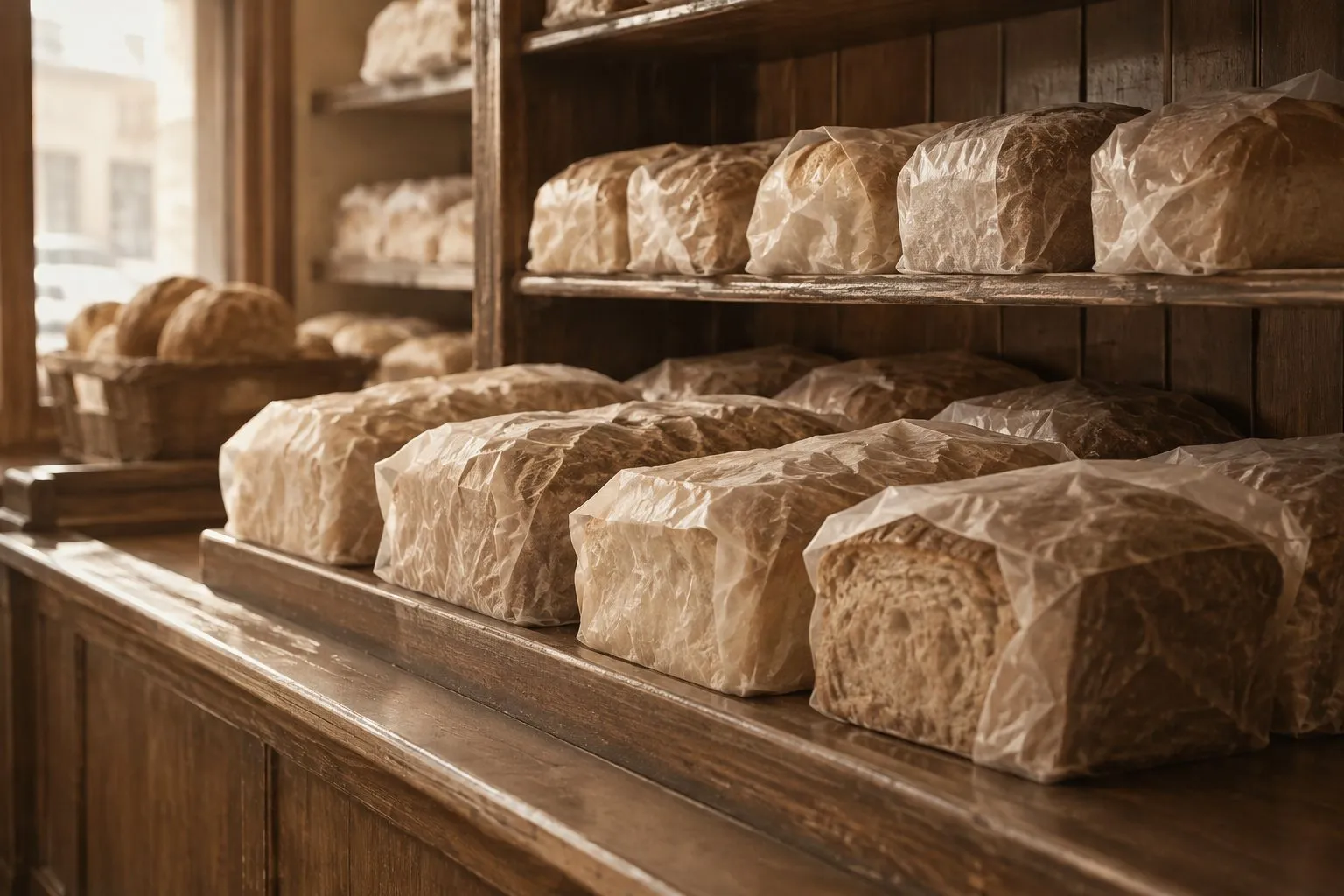
The bread slicer that made “sliced bread” a product was Otto Frederick Rohwedder's machine. It cut a whole loaf in one operation, and the first loaf it sliced for sale went on sale on July 7, 1928, in Chillicothe, Missouri. That date answers most “when was the bread slicer invented” searches. It does not mean Rohwedder invented slicing bread with a machine, and it has nothing to do with the hand-crank slicers sold for home kitchens today.
Timeline
| Year | Event | Source |
|---|---|---|
| 1880 | Otto Frederick Rohwedder born on July 6 in Des Moines, Iowa; he grows up in Davenport | Lemelson-MIT |
| about 1912 | He begins working on a bread-slicing machine | Lemelson-MIT |
| 1916 | He sells his three jewelry stores in St. Joseph, Missouri, and returns to Davenport | Lemelson-MIT |
| late 1917 | A fire at a factory in Monmouth, Illinois, that had agreed to build his first slicers destroys his blueprints | Lemelson-MIT |
| 1922 | Harold E. Bjorlin of Duluth, Minnesota, is granted a US patent for a power-driven bread-slicing machine | US 1,420,235 |
| 1927 | Rohwedder solves the staling problem with a machine that slices and wraps | Lemelson-MIT |
| July 7, 1928 | Chillicothe Baking Company sells the first loaf, Kleen Maid Sliced Bread | Lemelson-MIT, Wikipedia |
| 1928 | St. Louis baker Gustav Papendick buys the second slicer and keeps the slices together with a cardboard tray | Wikipedia |
| 1930 | Wonder Bread begins promoting sliced bread | Lemelson-MIT, Wikipedia |
| 1932 | US patent 1,867,377 granted on July 12 (filed November 26, 1928) | Google Patents |
| 1933 | US bakeries sell more sliced than unsliced bread | Lemelson-MIT |
| 1943 | Ban on the sale of pre-sliced bread from January 18 to March 8 | Wikipedia |
| 1960 | Rohwedder dies on November 8 in Concord, Michigan | Lemelson-MIT |
How Rohwedder's machine worked
The patent title says it plainly: a machine for slicing an entire loaf at a single operation. According to the patent, it used several endless cutting bands of spring steel; neighboring bands ran in opposite directions, and adjustable arms set the spacing between them – and with it the slice thickness. This is the same principle as today's commercial bread slicers, which cut the whole loaf at once at a fixed spacing. It is not a home device.
His real problem was not the cutting but the staling. Sliced bread dried out before it sold. Lemelson-MIT credits him with a machine that sliced and wrapped the loaf by 1927; Wikipedia adds that Gustav Papendick in St. Louis kept the slices together with a cardboard tray so that wrapping machines could handle them.
What the common answers get wrong
The 1943 sliced-bread ban
In January 1943, Secretary of Agriculture Claude R. Wickard, acting as Food Administrator, ordered bakeries to stop selling pre-sliced bread. According to Wikipedia, officials argued that sliced loaves needed heavier wrapping to stay fresh, and the order was also meant to offset a bread price increase. It took effect on January 18 and was rescinded on March 8, 1943, after public complaints; Wickard said the savings were smaller than expected and enough wax paper was on hand. The order applied to bakeries. Slicing a loaf at home stayed legal throughout.
Where the home bread slicer fits in
The slicer on this site's pages is a different machine. A manual bread slicer for the home has no motor: either a round serrated blade turned by a crank while you push the loaf against a fence, or a frame that guides your bread knife. It cuts one slice at a time, not a whole loaf. When these household devices first appeared is not covered by the sources we read, so we do not give a date. What is documented is their current form, for example the Zassenhaus Classic with its stepless 1 to 18 mm fence; the brand is covered on Zassenhaus bread slicers. Older household slicers and what to check before buying one secondhand are on antique bread slicers.
How the different slicer designs compare – crank, guide, bow knife, guillotine and electric – is explained on types of bread slicers. If you are here because you want to slice your own loaves evenly, the practical next step is the page on the hand-crank bread slicer, which explains how the rotary blade works and which models publish their specs.
Where to see the original
According to Lemelson-MIT, one of the first models of Rohwedder's slicer is held by the Smithsonian Institution in Washington, D.C. We could not open the museum's catalog record, so details such as the exhibit status are not confirmed here.
How we sourced this page
The dates come from Lemelson-MIT's biography of Rohwedder, the patent records on Google Patents and the Wikipedia article on sliced bread, read on 22 October 2026. Where these sources disagree – mainly on the fire – we say so. Our general approach is described under how we compare.
Questions readers ask
Who invented the bread slicer?
Otto Frederick Rohwedder, a jeweler from Davenport, Iowa, invented the first machine that sliced an entire loaf of bread for sale. Lemelson-MIT dates his first sale to the Chillicothe Baking Company in 1928. Earlier bread-slicing machines existed – a 1922 US patent by Harold E. Bjorlin describes one – but Rohwedder's whole-loaf machine is the one that brought sliced bread to stores.
When was sliced bread first sold?
On July 7, 1928, by the Chillicothe Baking Company in Chillicothe, Missouri, under the name Kleen Maid Sliced Bread, according to Lemelson-MIT. Wonder Bread began promoting sliced bread nationally in 1930, and by 1933 US bakeries sold more sliced than unsliced bread.
Why was sliced bread banned for 47 days in 1943?
The figure is wrong. The US order took effect on January 18, 1943, and was rescinded on March 8, 1943 – 49 days, not 47. It banned the sale of pre-sliced bread by bakeries as a wartime conservation measure; slicing bread at home was never banned. The order came from Secretary of Agriculture Claude R. Wickard.
Where does the phrase “the best thing since sliced bread” come from?
Its exact origin is not documented in the sources we read. Wikipedia cites early advertising uses: a 1933 ad that called a product the first improvement since sliced bread and a 1940 ad that spoke of the greatest convenience since sliced bread. Both show that sliced bread had become the benchmark for convenience within a few years of 1928.
Sources we read
Keep reading
- ExplainerTypes of bread slicersThe types of bread slicers explained: rotary hand-crank, slicing guide, bow knife, guillotine, food slicer and electric knife – how each cuts and what it suits.
- Buying guideHand-crank slicersHow a hand-crank bread slicer works, what the spec sheets say about thickness, blade and carriage, and which rotary slicer fits your loaf – no motor, no cord.
- BrandZassenhausZassenhaus bread slicers explained: who makes them, Classic vs. Vintage, slice range, where they are made, replacement blades and the safety points from the manual.
- About usHow we compareHow our bread slicer picks come about: which spec sheets we read, how we label listing-only products, what we never claim and how the site is funded.
Who compares here
manualbreadslicer.com Editorial Team
Bread slicer comparisons & explainers
We are the editorial team at manualbreadslicer.com. We compare hand-crank bread slicers, slicing guides and their electric alternatives using manufacturer spec sheets, manuals, retailer data and primary sources such as Lemelson-MIT – with sources on every page. We do not run lab tests, and we say so openly.
- Spec sheets & manuals compared
- Sources on every page
- No lab tests – stated openly
- Publisher details in the imprint